December core consumer prices rose at a 2.6% annual rate, less than expected

Core U.S. consumer prices rose less than predicted in December, reinforcing hopes that inflation is tempering as the Federal Reserve contemplates its next move on interest rates.
Excluding volatile food and energy prices, the consumer price index showed a seasonally adjusted 0.2% gain on a monthly basis and 2.6% annually, the Bureau of Labor Statistics reported Tuesday. Both were 0.1 percentage point below expectations. Though they look at both measures, Fed officials consider core inflation a better long-run gauge of where inflation is heading.
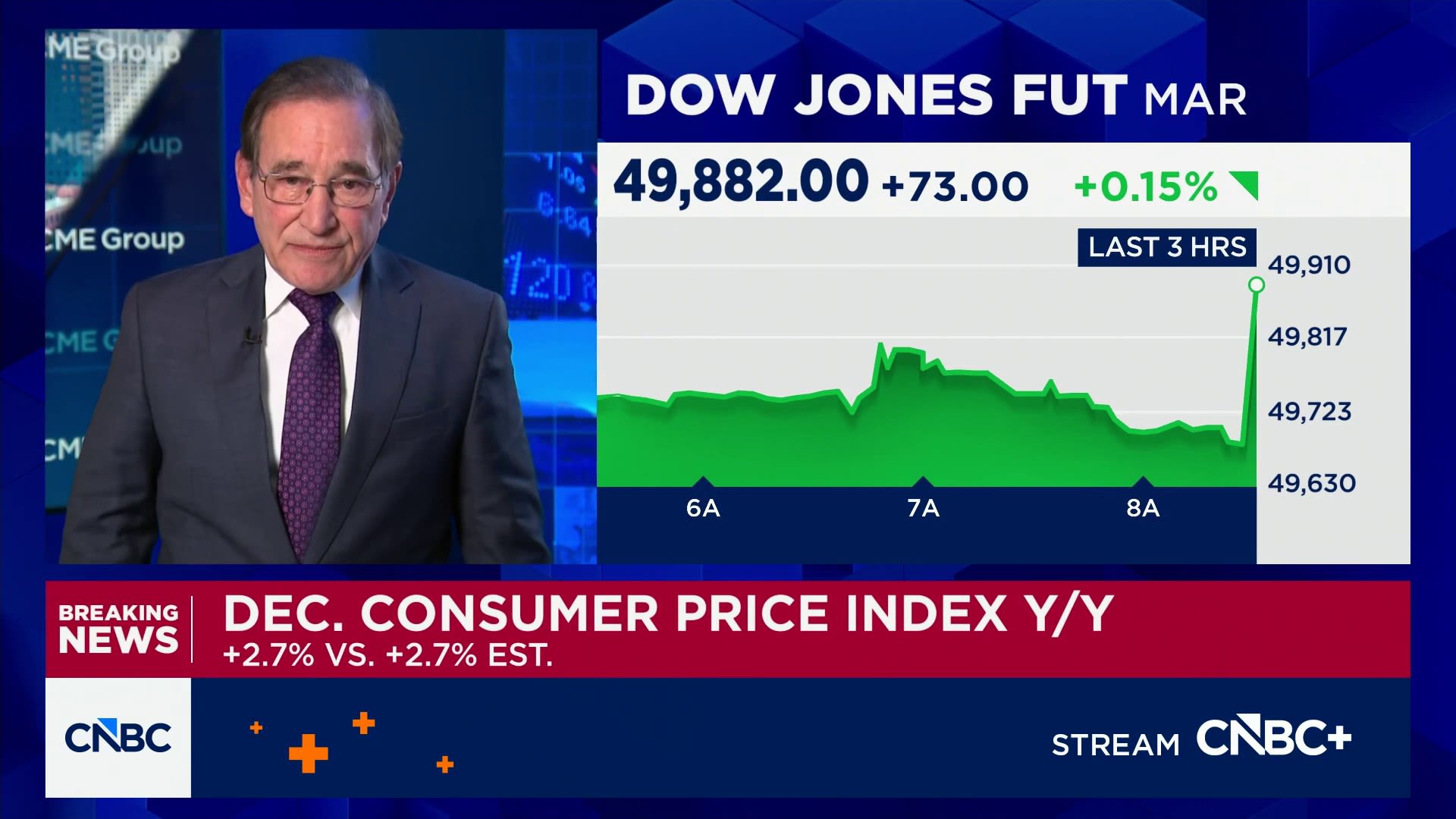
On a headline basis, the CPI posted an increase of 0.3% for the month, putting the all-items annual rate at 2.7%. Both were exactly in line with the Dow Jones consensus estimate.
The Fed targets inflation at 2% annually, so the report provides some evidence that the pace of price increases is moving back to target but remains elevated.
Stock market futures rose following the report while Treasury yields were lower.
Shelter, a key element of stickiness, increased 0.4%, which was the biggest item for the monthly increase, according to the BLS. The category accounts for more than one-third of the CPI weighting and was up 3.2% on an annual basis.
Other parts of the report also showed inflation persisting.
Food prices jumped 0.7% for the month, though egg prices tumbled 8.2% and fell nearly 21% from a year ago after soaring previously. Other areas seeing increases included recreation, air fares and medical care.
Some tariff-sensitive categories including apparel, also posted gains. However, household furnishings saw a 0.5% decrease as President Donald Trump backed off on threatened tariff increases for imports in that sector.
The 1.2% increase for recreation was the largest monthly gain ever for the index in data going back to 1993, the BLS said.
The report likely keeps the central bank on hold at least for the moment. Policymakers cut their benchmark rate three times in the latter part of 2025, and markets expect them to stay on hold through the first half of the new year as they assess the impact of the cuts on general economic conditions.
“We’ve seen this movie before — inflation isn’t reheating, but it remains above target,” wrote Ellen Zentner, chief economic strategist at Morgan Stanley Wealth Management. “There’s still only modest pass-through from tariffs, but housing affordability isn’t thawing. Today’s inflation report doesn’t give the Fed what it needs to cut interest rates later this month.”
Fed officials currently are weighing risks to the labor market against the potential for inflation to linger. Trump’s tariffs have added another wrinkle to the equation, though most policymakers see the impact on inflation as temporary.
Some areas of the report, particularly in goods, showed signs of deflation. Used cars and trucks declined 1.1% and the communication index slipped 1.9%. New vehicle prices were flat.
Tuesday’s release brings the BLS current on inflation and employment after the government shutdown last year caused a suspension of data collection and reports.
Source – CNBC