Anutin apologises for fuel mismanagement
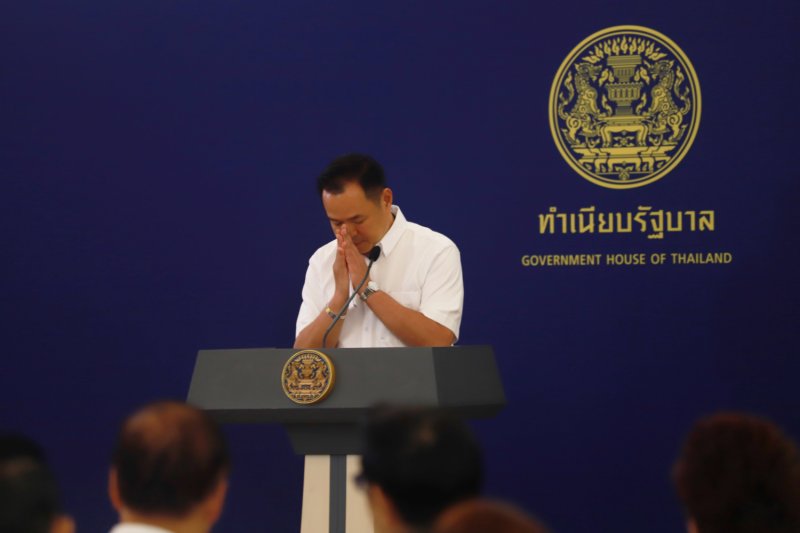
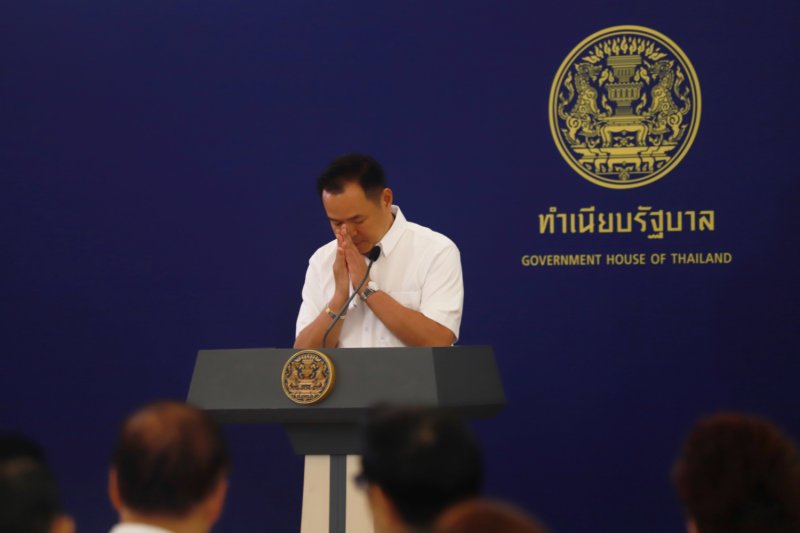
Prime Minister Anutin Charnvirakul has apologised for fuel mismanagement in Thailand, saying the disruptions caused by the Middle East war have lasted longer than expected.
Ending price caps at the pumps will help prevent oil smuggling to neighbouring countries and ease shortages, Mr Anutin said at a press conference at Government House in Bangkok on Saturday to discuss conditions after one month of conflict in the Middle East.
On Wednesday night, Thais were shocked by a six-baht per litre price hike after the government abandoned costly attempts to cap prices. The announcement by the state Oil Fuel Fund triggered a rush by drivers to fill up before the new prices took effect at 5 am Thursday, causing long queues at service stations nationwide.
The government faced widespread criticism over the sudden increase. While the Oil Fuel Fund Office later defended the sharp rise as the result of several factors, Mr Anutin had remained silent on the decision until Saturday.
“I apologise to people for the chaos caused by the management of the fuel situation,” he said while bowing before the press.
In the first 15 days after the US-Israel war against Iran began on Feb 28, the government tried to cap fuel prices to ease the burden on the public, estimating the war would not last long.
The oil fund spent 20 billion baht subsidising prices in the first three weeks of the war, and once the daily subsidy cost reached 2 billion baht it became unsustainable.
“Now the situation has changed and is unlikely to end soon, so the government has had to adjust its measures, focusing on vulnerable groups such as low-income workers, farmers and (transport) operators,” Mr Anutin said.
He explained that ending the price-cap does not mean fully floating prices, but rather reducing the subsidy rate — from 24 baht per litre to 16 baht. This would better reflect global market conditions and align more closely with neighbouring countries.
The change will prevent subsidised Thai fuel from being smuggled across borders for profit and stop hoarding for resale to the industrial sector, he said.
He added that fuel shortages at petrol stations nationwide have eased, citing government measures to increase delivery rounds, inject reserves into the system and strictly enforce anti-hoarding laws.
As well, he said, an agreement negotiated with Iran to allow Thai oil vessels safe passage through the Strait of Hormuz would alleviate concerns over fuel imports.
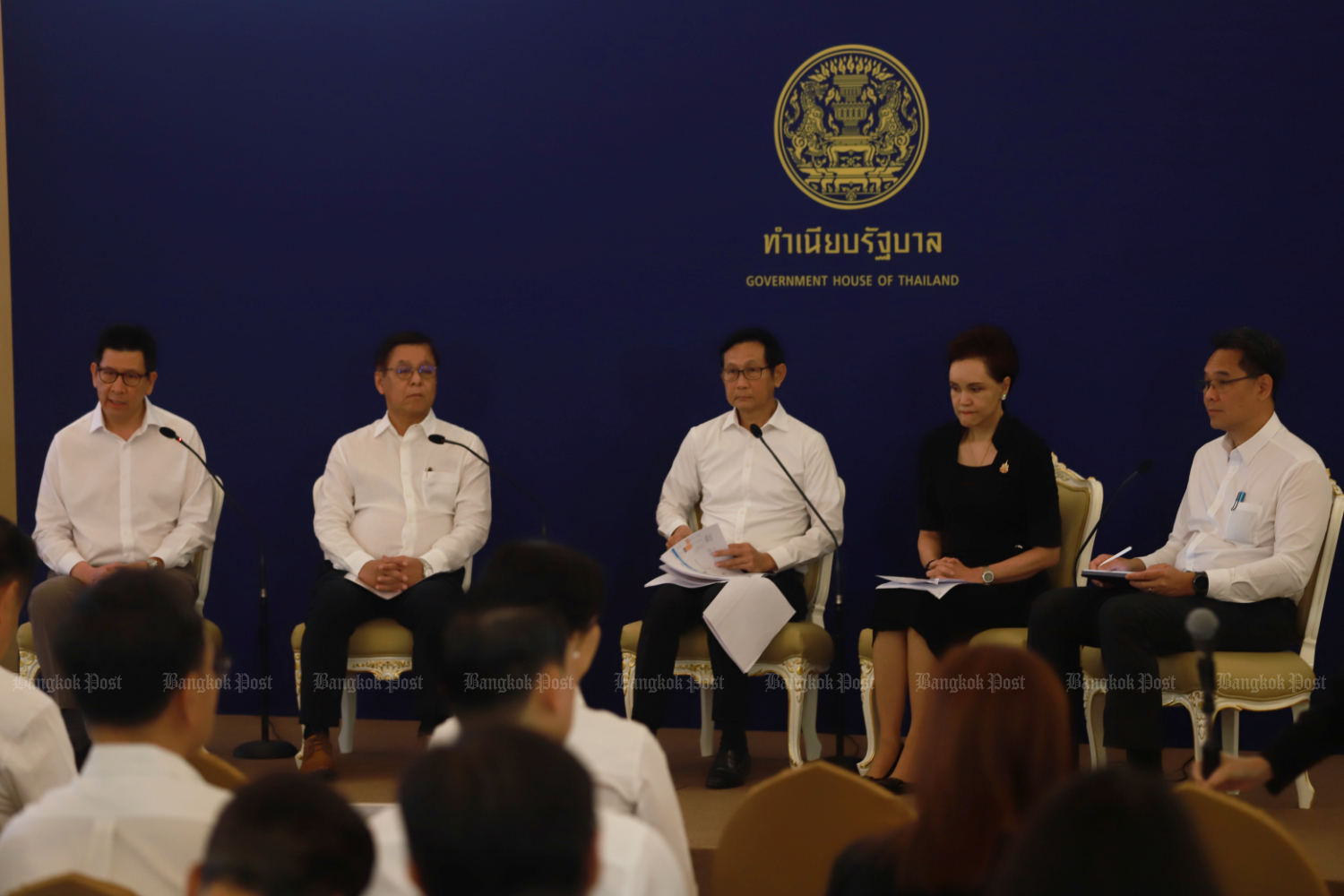
Finance Minister Ekniti Nitithanprapas, (left), Foreign Affairs Minister Sihasak Phuangketkeow (second from left), Energy Minister Auttapol Rerkpiboon (centre) Commerce Minister Suphajee Suthumpun (second from right) and Danucha Pichayanan, secretary-general of the National Economic and Social Development Council (right) are present at the press briefing. (Photo: Apichart Jinakul)
Fuel demand up 22%
With a refining capacity of 77 million litres per day, Thailand has more than enough supply to meet its average fuel consumption of 67 million litres, but recent panic buying has pushed daily demand up to 82 million litres — 22% above the average, said Mr Anutin.
The government is seeking public cooperation to curb that excess demand of about 15 million litres per day, which he said has been largely driven by public concern. With prudent consumption, any surplus can be added to reserves, ensuring sufficient stockpiles regardless of how long the Mideast conflict lasts.
Meanwhile, provincial governors have been instructed to manage supplies rigorously, especially along main routes during the upcoming Songkran holiday next month.
“People can be assured of having enough fuel for travel back to their hometowns,” Mr Anutin said.
He noted that Thai fuel prices remain lower than in Malaysia, Vietnam and Laos, and urged people to adjust their way of living to get through the situation together.
‘Save one litre a day’
Mr Anutin said Thailand has around 10 million households, and if each one reduces fuel consumption by just one litre per day — regardless of fuel type — the country would cut usage by up to 10 million litres daily. This would in turn reduce imports or increase national reserves by the same amount.
Such savings would also ease the government’s subsidy burden, currently averaging 20 baht per litre, potentially cutting oil fund compensation by 200 million baht per day. With fuel at an average price of 40 baht per litre, households would collectively save about 400 million baht daily.
The government plans to redirect these savings into the Khon La Khrueng Plus co-payment scheme to help reduce living costs and stimulate the economy immediately, he added.
At the same event, Mr Anutin also confirmed that the list of cabinet ministers would be submitted for royal endorsement on Monday, saying all qualification issues have been resolved and a new government will be in place next week.
Once sworn in, he said, the government will coordinate with the Speaker of Parliament to deliver its policy statement and begin working to address global crises as soon as possible.
Source – Bangkok News