Special Forces Sgt. in Polymarket Maduro raid bet case released; Kalshi says it blocked him

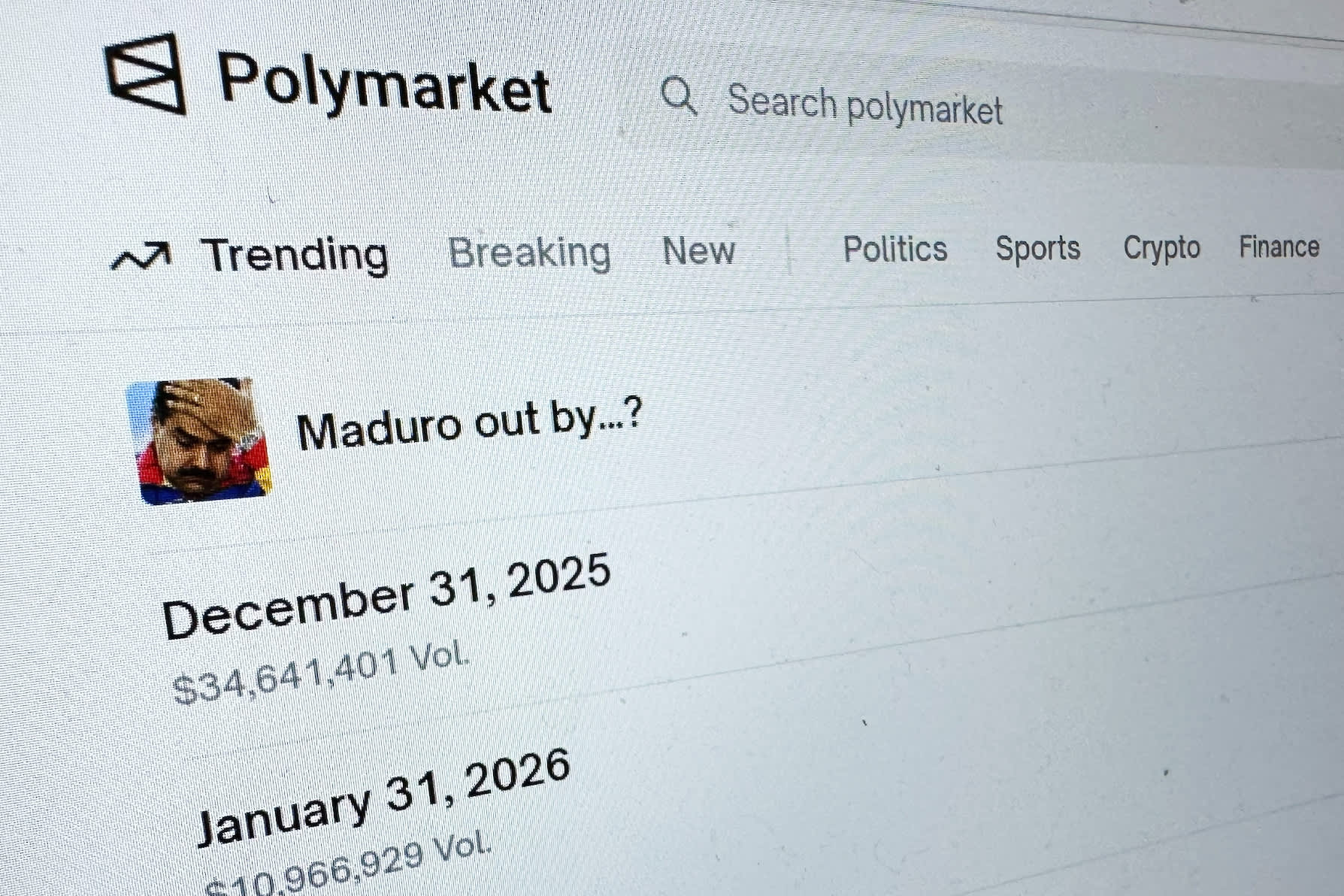
The Polymarket prediction market website is displayed on a computer screen, Jan. 11, 2026, in New York.
Wyatte Grantham-Philips | AP
The Army Special Forces soldier criminally charged in connection with making hugely profitable bets on Polymarket related to the U.S. military raid that captured Venezuelan leader Nicolás Maduro was released Friday on an unsecured $250,000 bond after appearing in federal court in Raleigh, North Carolina.
Master Sgt. Gannon Ken Van Dyke was ordered to appear Tuesday in U.S. District Court in Manhattan, where he has been indicted on wire fraud and other charges related to allegedly using classified information about the planned operation to win nearly $410,000 from the bets and then trying to cover up the scheme.
Van Dyke, who has served in the Army since 2008, was arrested Thursday in North Carolina, where he is based at Fort Bragg.
Kalshi, Polymarket’s leading competitor in the prediction markets sector, confirmed on Friday that it had blocked Van Dyke from opening a Kalshi account. Reuters first reported that Kalshi had blocked Van Dyke’s attempt to create an account.
Elisabeth Diana, a spokeswoman for Kalshi, said she could not give details of when the 38-year-old Van Dyke tried to open an account or why he was prevented from doing so.
But a civil lawsuit filed against Van Dyke on Thursday by the Commodity Futures Trading Commission alleges that on Dec. 24, he “submitted an application to open an account at a CFTC-licensed and regulated designated contract market, not affiliated with Polymarket, which allows U.S.-based users to trade event contracts.”
Kalshi is such a licensed market.
“At the time, the DCM offered event contracts related to Venezuela, including event contracts related to the removal of Maduro,” the CFTC lawsuit says.
“Van Dyke was unable to open his account at the DCM, despite contacting the DCM’s customer support chat on or around December 26, 27, and 28, 2025.”
Van Dyke allegedly opened his Polymarket account on Dec. 27, nearly three weeks after he became involved in planning and executing the Jan. 3 raid in Caracas that ended with U.S. Special Forces capturing Maduro and his wife and putting them on a Navy ship to be sent to the U.S., prosecutors said. The couple face federal drug charges in the same court where Van Dyke was recently indicted, prosecutors said.
In the week leading up to the raid, Van Dyke used his Polymarket account to make a series of wagers on contracts on questions of whether U.S. forces would be in Venezuela by Jan. 31, whether Maduro would be out of office by that date and on related questions, the indictment alleges.
He allegedly wagered about $33,000 in more than a dozen bets, according to the indictment, which is being prosecuted by the U.S. Attorney’s Office for the Southern District of New York.
Prediction market controversy
Van Dyke’s arrest is the latest in a series of controversies involving prediction markets, whose growing popularity has raised concerns about gambling addiction and about people with inside information exploiting their knowledge to wager on event contracts.
On Friday, Sen. Bernie Moreno, R-Ohio, introduced a bill that would bar U.S. senators from trading on prediction markets.
On Wednesday, a day before Van Dyke’s arrest, Kalshi revealed it had fined and suspended one Senate candidate and two candidates for the House of Representatives for trading on their own campaigns.
Polymarket CEO Shayne Coplan, in a post on X on Friday, said his company had notified the Department of Justice about suspicious activity on Van Dyke’s account.
“Grateful the DOJ officially acknowledged Polymarket’s cooperation on this case. Noise aside, the reality is we work proactively with all relevant authorities on any suspicious activity on our marketplace,” Coplan said.
“We flagged this, referred it, and cooperated throughout the process,” he said. “This happens constantly behind the scenes, despite what many are led to believe.”
Disclosure: CNBC and Kalshi have a commercial relationship that includes a CNBC minority investment.
Source – CNBC