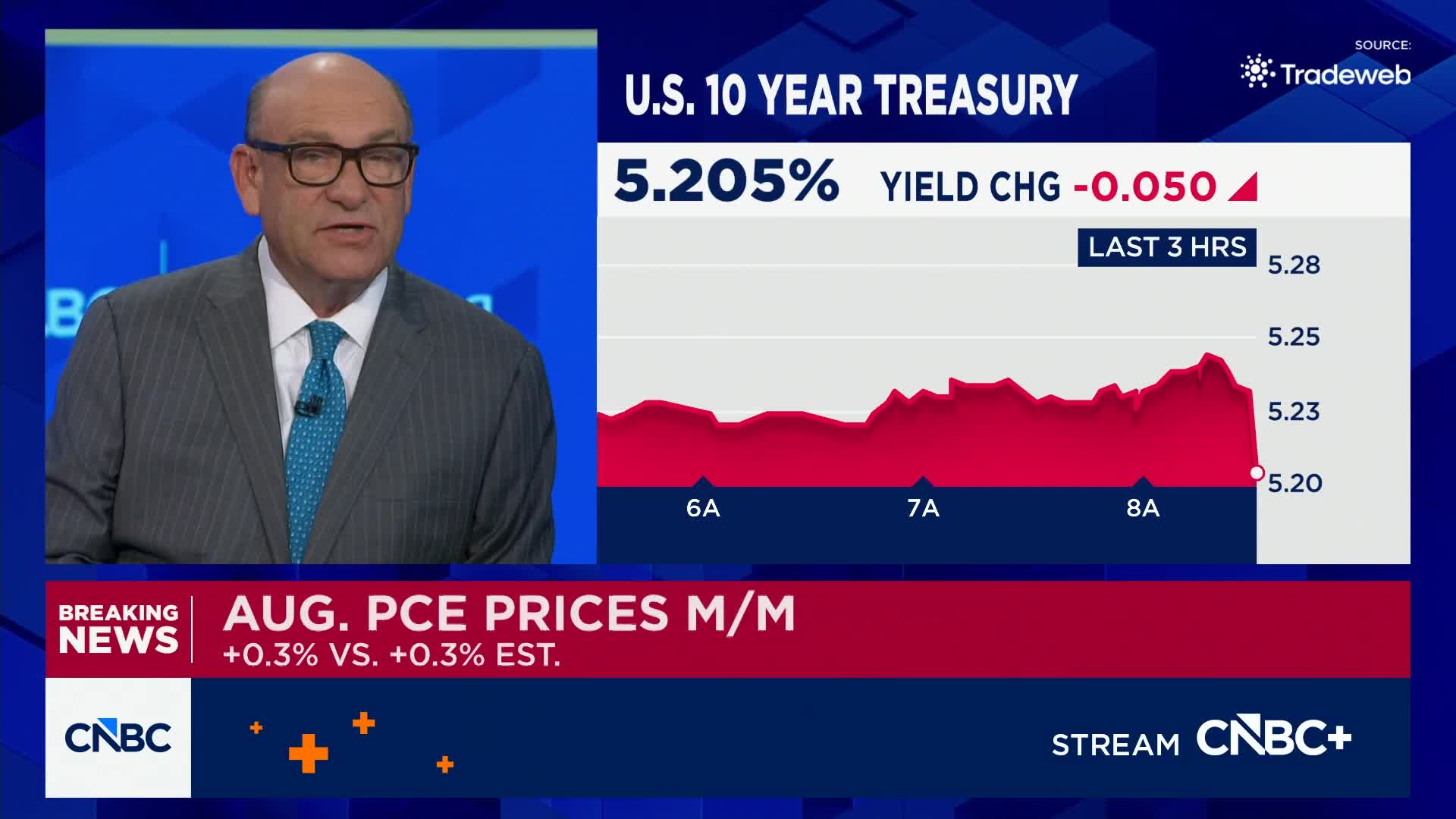
Fed’s preferred gauge showed core inflation at 3.0% in August, much lighter than expected

Consumer prices posted a smaller-than-expected increase in August from a year ago, according to the Federal Reserve’s primary inflation gauge, the Commerce Department reported Wednesday.
The personal consumption expenditures price index rose a seasonally adjusted 0.3% for the month, putting the 12-month gain at 3.4%. Economists surveyed by Dow Jones had been looking for increases of 0.3% and 3.7%, respectively.
Excluding food and energy, PCE posted a 0.2% climb that put the annual core level at 3%. The respective forecasts were for 0.3% and 3.3%.
Though the Fed officially follows the headline PCE number, officials generally consider core a better gauge of longer-term trends.
While the annual increases were less than expected, they came as the Bureau of Economic Analysis adjusted the way it computes several components of the index. The BEA adjusted methodology for how it measures prices for legal services, software and computer accessories and portfolio management.
The revisions lowered the core July PCE level by 0.36 percentage point.
Stock market futures gained ground following the report while Treasury yields were negative. Traders priced in less of a chance of a Fed rate hike in October, pushing the next expected increase to December.
“This is good news for investors worried about the recent surge in bond yields, and it bolsters the case for not hiking in October,” said David Russell, global head of market strategy at TradeStation. “However, it’s also relatively old data at this point that doesn’t reflect this month’s surge in diesel prices.”
The report also showed that personal income rose 0.2% while spending increased 0.9%, against the respective consensus for 0.4% and 0.8%.
Inflation still high
Both PCE levels are still considerably higher than the central bank’s 2% target, raising the possibility that the Fed will follow up its September interest rate hike with another increase at either of its remaining meetings this year in October or December.
Energy costs were the primary culprit for the price rise in August, though multiple other sectors also showed gains. Gasoline jumped 4.4% and transportation services accelerated by 1.4%. Energy goods and services climbed 2.3%.
Goods and services prices both posted 0.3% increases.
“The PCE Inflation data – the Federal Reserve’s favorite – show no progress in August on inflation,” said Heather Long, chief economist at Navy Federal Credit Union. “And it’s inevitable that September will be higher. Meanwhile, American consumers are feeling the squeeze.”
In other economic news Wednesday, the Commerce Department reported that gross domestic product increased at a 2.2% annualized rate in the second quarter, according to the final of three estimates. That was up sharply from the prior estimate of 1.5% and reflected greater contributions from consumer and government spending as well as investment.
Real final sales to private domestic purchasers, a metric Fed officials watch closely to gauge underlying demand in the economy, increased 4.6%, an upward revision of 0.4 percentage point.
Inflation measures for the April-through-June period also were slightly lower, with headline PCE prices rising 5% and core at 3.3%, each 0.3 percentage point below the prior estimate.
For the Fed, the various economic signals have posed a quandary.
Policymakers typically can look through price spikes brought on by exogenous factors such as tariffs and the kind of supply shocks driven by the war with Iran. However, the persistence of the price increases, coupled with the unknowns of the artificial intelligence breakout, have posed challenges to traditional modes of thinking.
Markets had been pricing in a strong possibility that the Fed would follow its quarter percentage point September hike with another move in October. However, comments Tuesday from influential New York Fed President John Williams tempered those expectations, and the data Wednesday further dimmed the outlook for an October move.
“With the policy action we took at our September meeting, there is no need for urgency, and we have time to gather more information,” Williams said in a speech, comments that almost immediately triggered an adjustment in expectations.
Williams added that he still thinks another hike “may be appropriate late this year,” leading markets to price out the next increase to December.
Source – Middle east monitor