Simona Danieles legacy lives on; nothing disappears, it only transforms

With the power of a name that marked her as a defender of monkeys, Simona Daniele does not die. She lives on in the hearts of her loved ones, of the thousands of people who were fortunate enough to know her, and in the great legacy she leaves in this country.
Several decades ago, Simona came to Costa Rica, a country that advertising promotes as a protected natural paradise, but where she soon discovered a very different reality. In Tamarindo, urban growth was advancing in conflict with a natural environment that had existed long before it. Hundreds of monkeys have died by electrocution while moving between the trees and the poles and cables of the power grid.
That is how SalveMonos was born, a play on words between saving the monkeys and saving ourselves.
At first it was a small organization made up mainly of Simona and two friends who rescued as many monkeys as they could. Mothers electrocuted, leaving orphaned young. Monkeys that survived an electric shock only to die days later. Thousands of stories that may never be told.
Taking photos and videos and documenting what was happening was not enough. Thanks to many people, the animals reached places where they could be treated by veterinarians and rescue centers. The emotional burden of facing this suffering over and over can be overwhelming, even more so when the effort seems to run up against the indifference of much of the public and of institutions. Sustaining that fight for years, facing so much pain and the helplessness of not being able to save them all, carried an enormous human cost.
Wildlife is the animal life that reflects us as humans; we are just like them. They are babies feeding, mothers worried about their young, children playing, families.
Our existence cannot trample over them because of our whim for a wider road, a hotel with more rooms, or for stealing the public walkway for the restaurant. It was never right for a hotel to hoard the beach and expand its yard, for sewage to foul the streams, or for the electric companies not to insulate their cables.
How many animals have to die before we develop empathy and compassion?
Simona was outraged by these injustices, and she turned that outrage into hundreds, perhaps thousands, of actions to protect animals. Because defending wildlife is also defending the conditions that make our own existence possible.
A small citizen organization cannot, on its own, confront a problem of national scope. To truly protect wildlife, it was necessary to go beyond rescuing animals and attending to each emergency. Things that put them in danger had to change.
Costa Rica’s Legislative Assembly unanimously approved in second debate the bill for the Law to Guarantee Wildlife Crossings in Infrastructure (file 23.166), which adds article 31 bis to the Organic Environmental Law (No. 7554), with the aim of guaranteeing wildlife crossings on road infrastructure.
Central obligation: All public road infrastructure (existing or new) that fragments habitats and affects the movement of wildlife must have structures that allow species to pass freely, especially in protected areas and natural crossing points.
The actors and their responsibilities:
- MOPT (Ministry of Public Works and Transport) and Municipalities: must coordinate with SINAC (National System of Conservation Areas) to include wildlife crossings in new projects or to rule out the need for them.
- SINAC: endorses the technical-scientific studies that identify where crossings should be implemented.
- SETENA (National Environmental Technical Secretariat): verifies compliance as part of the Environmental Viability approval.
- Developer/responsible company: carries out the technical study, installs the crossings, and respects the designs in the environmental management plan.
In addition, these measures must be considered from the pre-investment stage of a project, including their costs in the budget. “Very low impact” projects that affect ecological connectivity must also implement mitigation measures, and priority is given to sites with evidence of high roadkill mortality.
Today, the Wildlife Crossings Law represents progress along that path, establishing measures so that animals can move safely through their habitats. But laws alone are not enough. Companies and public institutions have a responsibility to prevent their activities from destroying or polluting the natural environment.
Since its beginnings, Salvemonos has recorded everything that happened, and its database has helped us become aware of what, sadly, continues to happen. So far the organization has counted more than 2,000 wildlife rescues, of which approximately 1,500 were monkeys that lost their lives to electrocution, roadkill, or attacks by domestic dogs. It has also filed more than 300 complaints in SITADA (the environmental complaints system) and made more than 200 requests to the local electric cooperative.
Its work has expanded to many communities, so there are now Salvemonos groups in several of them. More than 300 wildlife crossings have been installed. Thanks to the hard work of Simona and the organization’s collaborators, the work was documented and published scientifically. Public walkways in Tamarindo have been reforested, and schools and children have received environmental education. The community, developers, and even Costa Rican institutions such as the fire department and the police have been informed and advised on sustainability best practices and on rescue.
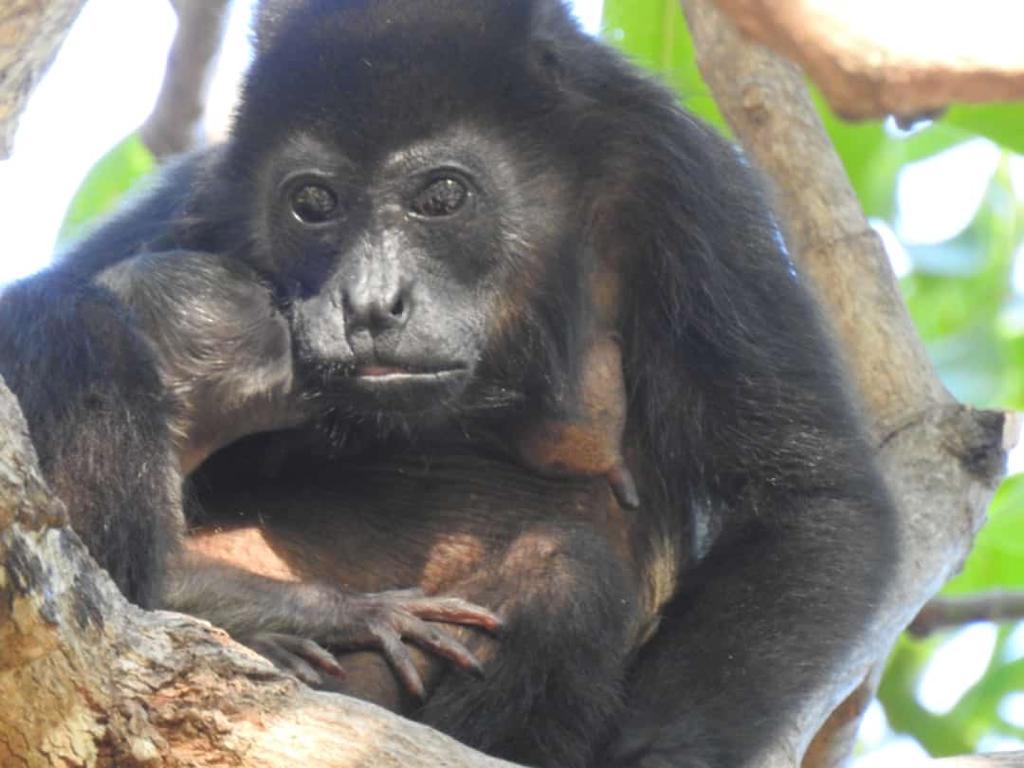
The loss of natural connectivity is affecting monkey populations in Guanacaste.
Bridges help, but trees remain irreplaceable
Although wildlife crossings are a solution for creating connectivity, trees are indispensable. Trees provide food, shelter, and travel routes for monkeys. That is why conserving existing trees, recovering tree cover, and protecting biological corridors must always be the priority.
Thanks to Simona’s initiative, every June 5th at CEPIA, an organization in Huacas where she served on the board, we gather to give trees to local people to plant at their homes. This was an inspiring initiative that we have replicated countless times in many communities through the work of the Nandamojo Association–Centro Pro Aguas de Guanacaste.
Reflection on her life
Perhaps this article is realistic in the sense of speaking the truth, but for me that is the essence of this human being who transforms. They say one must find one’s purpose in this life, and I believe this woman achieved hers. She was as happy as she could be, left daughters ready for life, was a pillar for community organizations, gave everything for the monkeys, and laughed, danced, and enjoyed everything life gave her.
Those of us who go on living on Earth must remember to keep fighting for animals and for causes, in whatever form the moment calls for: physically, legally, or with the force of rebellion. We must not be obedient in the face of injustice just because an institution has decided so. Caring for the territory is a right no one can take away from citizens; in the territory live trees, animals, and even humans (quote from Simona Daniele).
Simona remains in our awareness of animals, of life, and of true contact with nature. She remains in the work inherited by the members of community-based organizations. She remains in the new wildlife crossings law. Now she is surely rubbing shoulders with Jane Goodall and sending us a postcard from somewhere else.
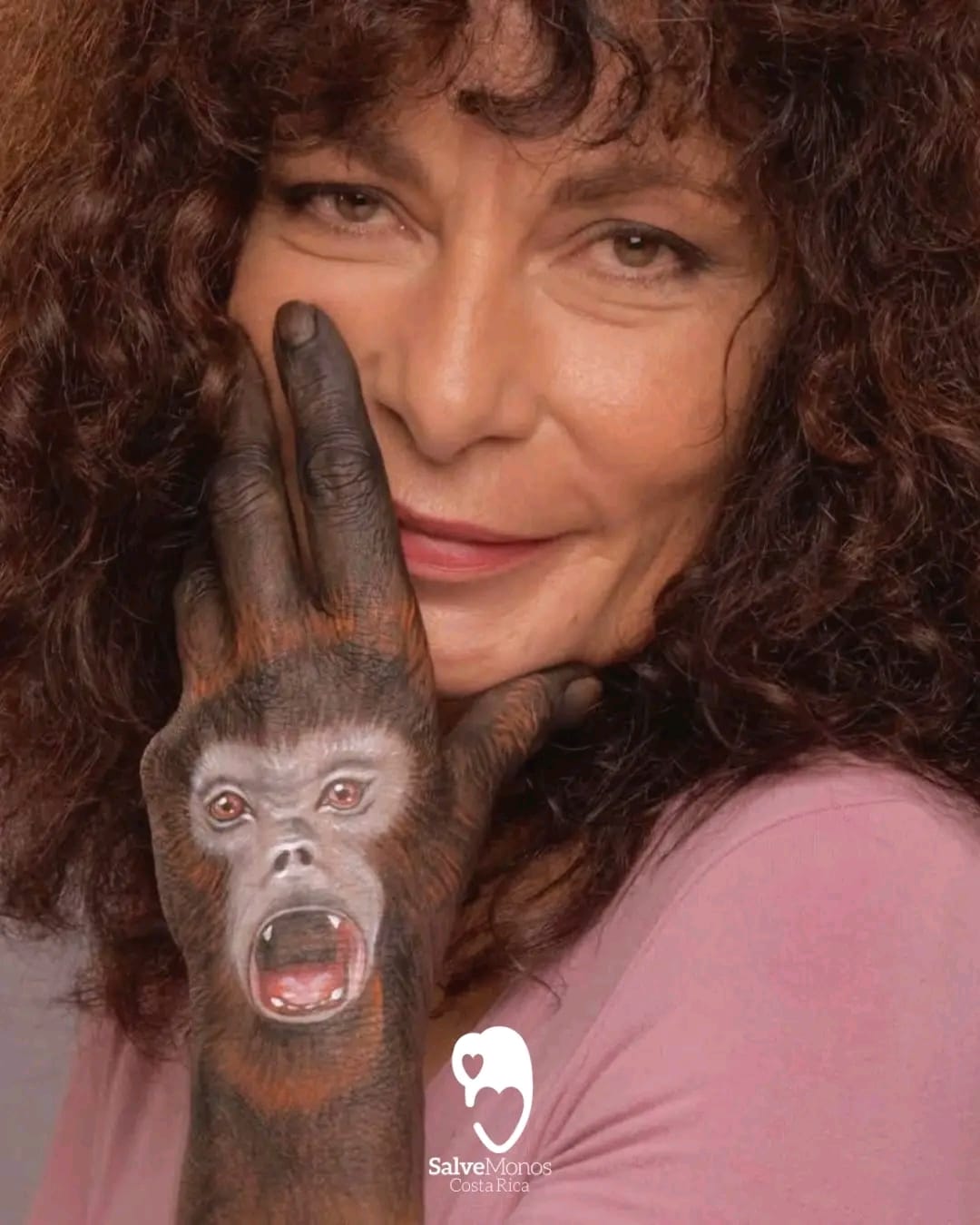
Simona Danielle founded Salvemonos in 2004. Photo: Salvemonos.
This text was written with support from Gina Malavassi and Inés Azofeifa.
*Marcia Gómez is a conservationist focused on botany, plant propagation, and ecological restoration. She is a collaborator with the Nandamojo Association–Centro Pro Aguas de Guanacaste.

Join Semillas and help sustain local, independent journalism in Guanacaste. Your contribution makes rigorous, revealing investigations possible, along with reporting from our communities and active listening to the people who live in them. Plus, you’ll receive benefits that help build community.
Source – Indonesia News