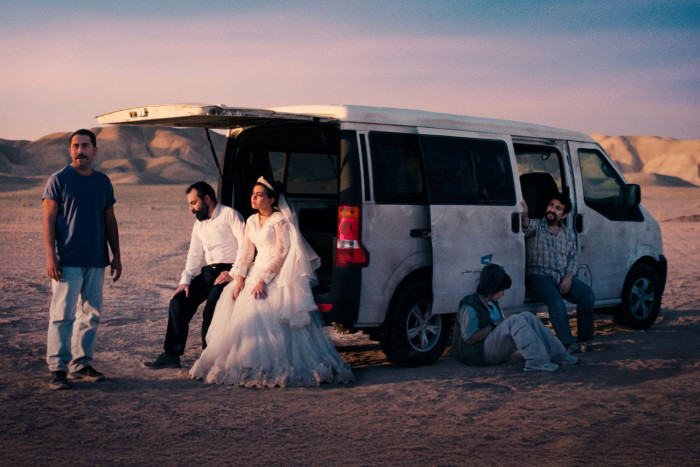
It Was Just an Accident: A humanistic middle finger to authoritarianism
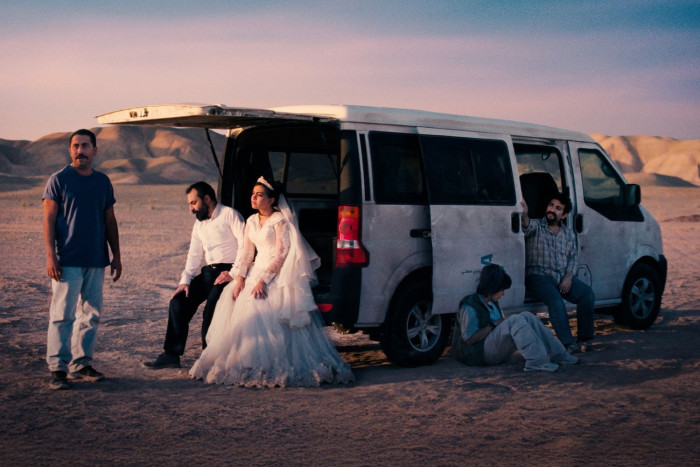
The Iranian film It Was Just an Accident (2025) is the product of seven months in prison, underground production, and defiance of controlling power. The 2025 Cannes winner proves its worth by blending entertainment with thought-provoking substance, inviting viewers to grapple with whether breaking the cycle of violence is an act of denying justice or reclaiming humanity.
I went to the theatre last Friday indecisive between the two choices available for my desired time slot: the blockbuster Return to Silent Hill and the critically acclaimed Palme d’Or award film. I felt I had some energy to focus on heavy stuff so I chose the latter. The film did touch on heavy subjects but it was fun and adrenaline-packed that it required no mental energy at all. Sorry Mr Panahi, I was not familiar with your game.
It has been talked about before here, but it is hard to talk about this without mentioning the story surrounding it. The director of the film, Jafar Panahi, has always been outspoken against the Iranian authoritarian regime. In 2022, he was detained in prison for seven months as a result of a mass protest, an event that shaped this film through the stories he heard behind bars. Panahi also filmed this underground in order to avoid seeking permission from censors.
After having watched the film, the concerning situation in Iran seemed to surge on my social media as if the algorithm knew what I just watched. Checking out a new music video from Harry Styles, I came across a comment: “I’m watching you from Iran. Internet access here is really hard and exhausting. We’re tired, grieving people… but Harry, I did everything I could just to get online and watch your music video. Thank you for being like a small glimmer of light for me in all this darkness.”
The two-week-long internet cut is a result of the anti-government protest in Iran in an attempt to censor the scope of violence of the crackdown.
Like the comment in Styles’ new music video or as Mr Rithdee beautifully put it, “Poetry won’t stop bullets and film may not unseat tyrants, but art continues to speak…”, there is something in art that speaks and inspires us. Likewise, It Was Just an Accident is a middle finger to the power that is trying to control us, no compromise.
The film follows Vahid, an ex-political prisoner who came across his former tormentor named Eghbal, dubbed the “peg-leg” (due to the sound from his prosthetic leg when he walks), and kidnapped him. The man denied any relation to Vahid so he gathered a group of former prisoners to help identify if it was the “peg-leg” and decide what to do if it was really the former tormentor.
Spoiler alert
Set against the backdrop of Iran, the film not only explores the characters but also the many ways that the city is corrupted: the underlit roads full of stray dogs that can be accidentally killed by cars, corrupted police that carry credit card machines so that they have more options to receive bribes, to how easy it is to kidnap your tormentor in broad daylight. All of the corruption allows for wrongdoings to happen easily.
I cannot help but think about another contender for International Film I saw last year that shares a similar title: Park Chan-wook’s No Other Choice (2025). In that film, the protagonist was put in a similar dilemma, forced by the situation, a bigger mechanism, to push aside humanity for survival. While No Other Choice serves as a cautionary tale that left a bitter taste, It Was Just an Accident ends on a more optimistic note.
All the main cast (except for one) were direct victims of the oppressing system. They went through a traumatic experience in prison that, one way to put it, “killed” them. What is left outside prison is a half-dead state, not fully alive, but not fully dead. All of them (even the oppressor) were left with some kind of scar, internal or physical. In order to take their life back, taking the life of their torturer seems naturally just. And when the opportunity presents itself, why would one not go about it?
Yet, it is easy to point a finger at someone or something for wrongdoings, whether that be a person who “left me no choice,” a situation that “was just an accident,” a system that “forces me to comply,” or a God that “destined it this way.”
This is also where the line is drawn between the main cast and the peg-leg. Even though Eghbal is also in a way a victim of his ‘responsibility’ as an officer of the state, he sold his soul in the name of authority.
But not for the main cast, they decided for life. As the film came to an end, Eghbal was spared. At this point the film has already established the humanity within the oppressor and the system’s corrupting influence, making the ending feel less like undelivered justice and more like a triumph of not succumbing to the system.
It is not always easy but we do have a choice. And it does not have to be an accident.
[embedded content]
Source – Bangkok News