Wild elephant relocated to curb human-elephant conflict
Officials hope retraining will keep ‘Si Daw Kaew’ from roaming into villages
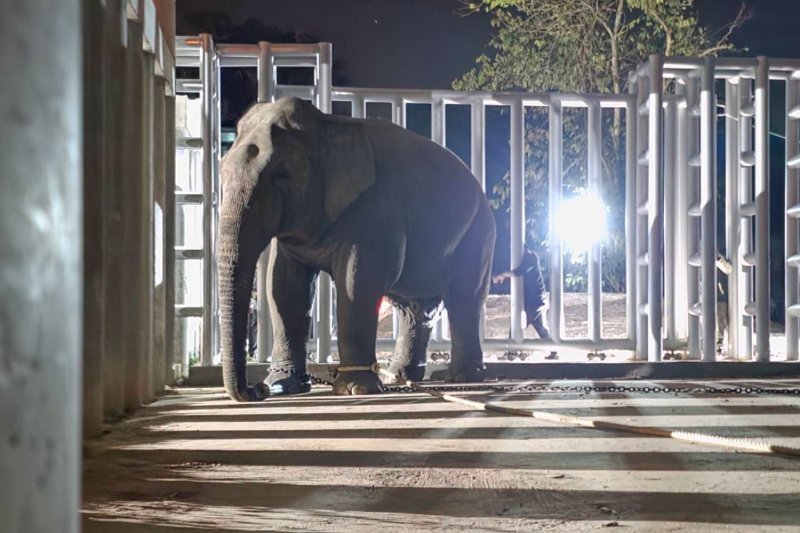
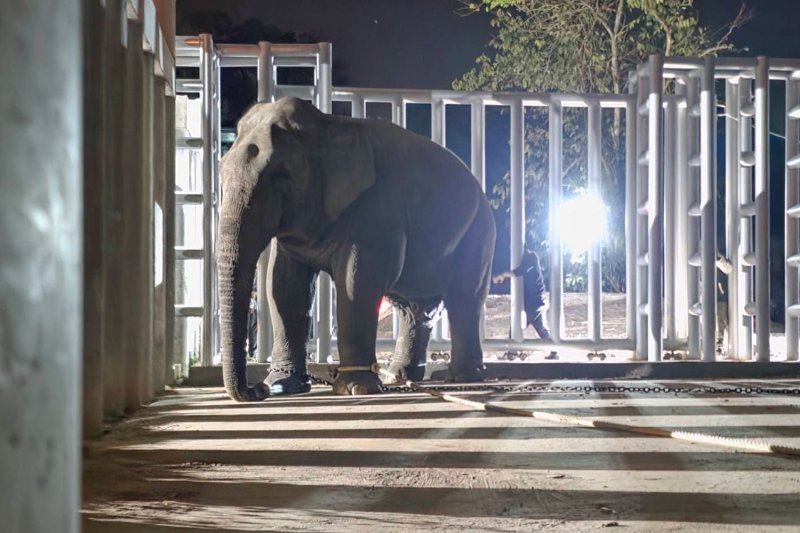
SA KAEO – A wild elephant known as Si Daw Kaew has been captured and relocated from Wang Nam Yen district in this northeastern province to an elephant behaviour modification facility, in a move aimed at reducing human-elephant conflict and improving community safety.
The operation in tambon Thung Maha Charoen was carried out by teams from the Protected Area Management offices in Si Racha and Prachin Buri, along with veterinarians and animal handlers. More than 150 personnel were involved in all, said Sukee Boonsarng, director of the Wildlife Conservation Office.
The mission began on Wednesday, with officers conducting planning and rehearsals throughout the morning before starting the operation on the ground at 4pm. Si Daw Kaew, a male elephant aged 30-35, was located at 4.50pm.
Veterinarians administered the first dose of sedatives at 6.47pm, with the final dose given at 9.59pm. The elephant was successfully loaded onto a transport truck shortly before midnight, Mr Sukee said.
The convoy stopped at a weighing point at 1.10am on Thursday, where Si Daw Kaew was found to weigh 5,630 kilogrammes. It arrived at the Chong Klam Bon Wildlife Breeding Station — a behaviour-modification centre in the province — at 2.20am, and the operation concluded when the elephant safely walked off the truck into a holding area at 3.02am.
Arun Pongpaitoon, director of the Protected Area Management office in Si Racha, said the relocation was necessary after Si Daw Kaew, which originated from the Khao Ang Rue Nai Wildlife Sanctuary in Sa Kaeo, repeatedly caused disturbances in nearby communities.
“Si Daw Kaew had entered residential areas, damaged property and raided plantations and barns,” Mr Arun said. “Although it had previously undergone behaviour modification, it continued attempting to break through barriers and escape from an electric-fenced holding area three to four times, resulting in repeated property damage and injuries.
“It was also believed to act as a herd leader, bringing younger wild elephants into villages — raising concerns about greater risks to lives and property in the future.”
The Chong Klam Bon behaviour-modification centre offers stronger holding structures and higher-security systems than the previous site, along with round-the-clock care from veterinarians and animal handlers.
The move is expected to reduce conflict between communities and wild elephants, particularly in Thung Maha Charoen, an area linked to a long-running royal initiative dating back to 1987 to relocate communities from forest zones.
The Department of National Parks, Wildlife and Plant Conservation said its ultimate goal is to adjust the elephant’s behaviour so that it can eventually be returned to a natural forest area away from human settlements, if everything proceeds as planned.
Mr Arun thanked residents for their cooperation, and said people wishing to visit wild elephants can contact the Chong Klam Bon Wildlife Breeding Station directly.
Source – Bangkok News