GM vs. Ford: U.S. defense, energy sectors add to automakers’ century-old rivalry
The GM Defense Infantry Squad Vehicle was engineered to meet U.S. military specifications. It is based on the automaker’s off-road Chevrolet Colorado ZR2 midsize truck architecture.
GM Defense
DETROIT — General Motors and Ford Motor have rivaled each other for more than a century in racing, vehicle sales and many other automobile-related activities.
But their latest battlegrounds have moved to actual battlefields and the U.S. energy grid.
Ford joined GM this year in seeking U.S. military contracts after the Trump administration approached U.S. companies about assisting the military with their expertise in mass manufacturing. The automakers’ efforts so far are largely focused on military vehicles, but could grow with time.
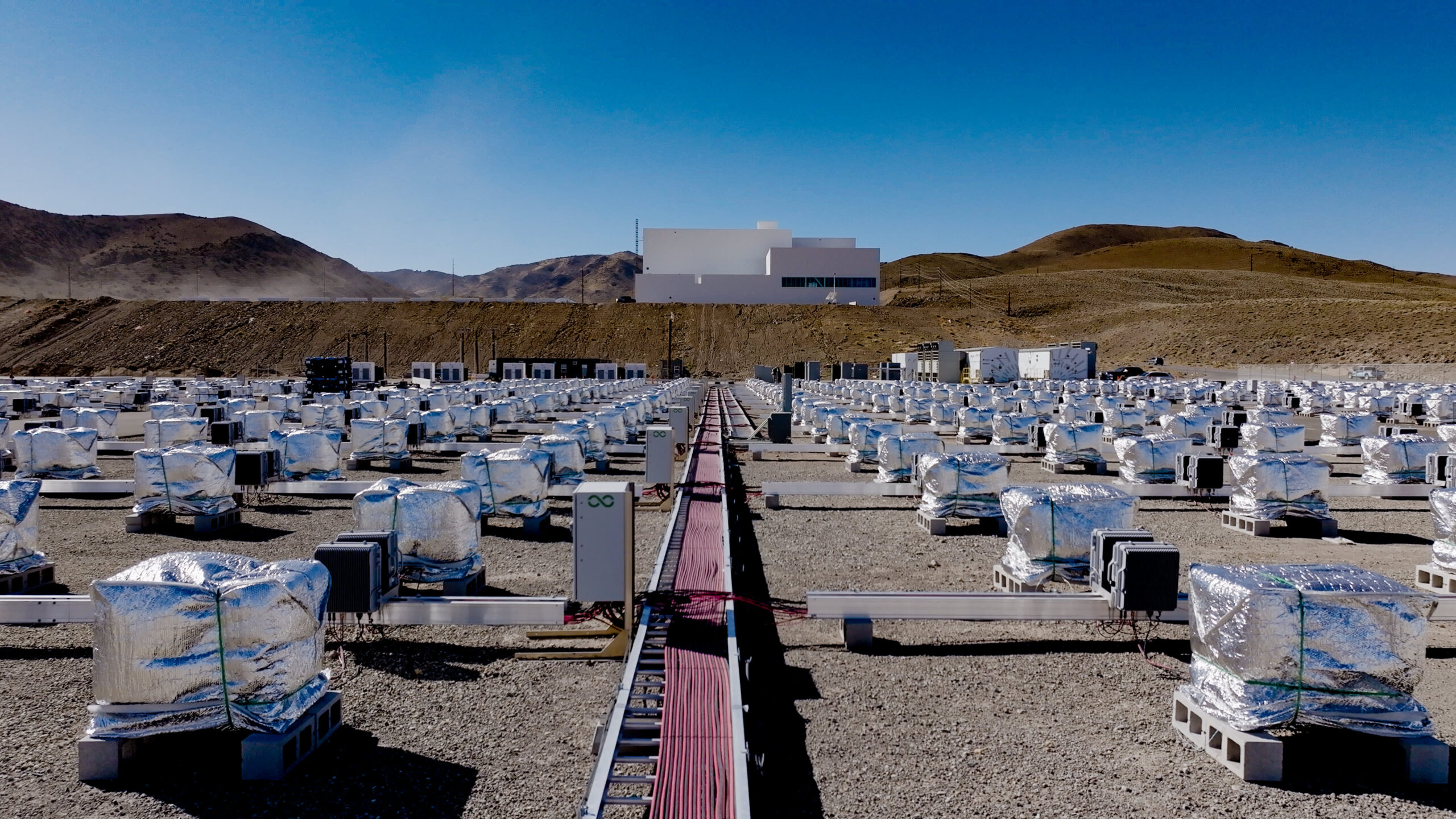
Simultaneously, both companies are entering the energy storage system, or ESS, market amid an expected growing need related to rising consumer energy costs and data centers. Energy storage systems use a lot of the same underlying technology as electric vehicle batteries to store power for homes, businesses and even utilities.
Both markets are viewed by Wall Street analysts as new potential growth areas for the automakers. At one point, it was thought new opportunities might come from all-electric vehicles, but Ford and GM have since lost billions of dollars on those efforts.
“They’re looking for new verticals,” Morningstar senior equity analyst David Whiston told CNBC. “Ford’s following GM’s lead into defense, and energy makes a lot of sense because you have all this EV capacity that now you don’t need. So instead of selling those factories, it’s a way to try and capitalize on the data center boom.”
The two markets are expected to be small portions of the companies’ focus and revenue for the foreseeable future, but they could help the automakers diversify their operations and complement their core businesses as new vehicle sales slow in the U.S.
“It’ll be hard to move the needle here massively, given the auto business’s top line, but it certainly can be helpful,” Whiston said.
Energy storage
The global ESS market is estimated to grow from $668.7 billion in 2024 to $5.12 trillion by 2034, according to research and consulting firm Global Market Insights. As part of that, the firm expects to see a significant expansion in the U.S.
“We’re seeing this huge projection of growth, and it’s already started growing,” Devon Wilson, vice president of sales and marketing at LG Energy Solution’s U.S. energy storage division, said during a recent event. “There’s a massive amount of just fundamental electricity need within the country.”
GM and Ford are attempting to capitalize on such expected growth to fill a void. The companies invested billions of dollars in plants to produce battery cells to meet EV demand that didn’t materialize.
GM’s energy business does not currently offer its own ESS, but its military division does and its Ultium Cells joint venture in Tennessee produces cells for its partner LG Energy Solution for storage.
Long-term, GM could move further into ESS, including developing next-generation sodium-ion batteries with Denver-based startup Peak Energy. Kurt Kelty, GM’s vice president of battery and sustainability, said he believes that technology can reshape grid-scale energy storage.

“We’re developing the cells right now. The performance on these cells is tremendous,” Kelty said. “The ESS market is a very attractive market. It’s a big market. It’s growing very quickly, and it’s something that we can contribute to.”
GM also has a partnership with Redwood Materials for reusing its large EV batteries for energy storage systems. GM also offers EV charging and ESS for residential use through its energy unit.
Meanwhile, Ford said in December that it plans to spend $2 billion to launch an energy business, including converting a Kentucky battery factory it had recently built with partner SK On to make units for energy storage by late 2027. It also plans to devote some factory space to make cells for residential storage at a factory in Marshall, Michigan.
“Investors see value in Ford’s ESS business,” Morgan Stanley analyst Andrew Percoco said in an investor note in June. He’s also called it an “underappreciated driver” of a path to profitability for Ford’s Model e electric vehicle business.
Ford Energy is part of the company’s Model e electric vehicle segment, which has guided for $4 billion in losses in 2026 before reaching breakeven by 2029. A key turning point is expected to be the company’s ESS business coming online in 2027.
The Ford BlueOval Battery Park under construction in Marshall, Michigan. The plant will produce lithium-ion phosphate batteries for electric vehicles and smaller batteries for household use.
Jim West | UCG | Universal Images Group | Getty Images
Ford CEO Jim Farley told investors on the automaker’s second-quarter earnings call in July that it’s in the “third inning” of selling out the 20 gigawatt hours of production capacity for ESS after announcing a five-year framework agreement with renewable-energy service provider EDF Power Solutions North America.
Defense industry
GM is years ahead of Ford when it comes to the U.S. defense industry. GM resurrected its defense unit in 2017 after a 14-year hiatus.
It has worked with the U.S. military on many projects, but the automaker was recently awarded a contract by the U.S. Army to build infantry squad vehicles, or ISVs, that it said could exceed $1 billion, depending on congressional appropriations.
While the contract amount is small compared with the company’s $48 billion in revenue during the second quarter, the opportunities for the automotive industry in U.S. military operations are expected to grow.
“Leveraging the capabilities, the scalability and the manufacturing abilities that come with all of the automotive companies and their tiered supplier is a huge benefit,” Alfred Grein, executive director for research and technology integration for the U.S. Army Combat Capabilities Development Command Ground Vehicle Systems Center, told CNBC.
GM said it expects its 2026 defense revenue to grow to almost $700 million and is targeting positive results on an earnings before interest and tax basis this year, while also building a backlog of future business.
“We are also working with Lockheed Martin and other leading companies to expand speed, scale and resilience in the defense industrial base,” GM CEO Mary Barra told investors in July. “Over time, all of this should make GM Defense a more meaningful and diversified contributor to our earnings.”
GM Defense’s next-generation prototype tactical vehicle.
Courtesy image
Grein, who manages the technology of manned and unmanned ground systems throughout the U.S. Army, said the Trump administration has made it easier for new companies, including automakers, to be granted such contracts. He also said domestic manufacturing in the U.S. is critical.
“Obviously, the concern about foreign entities’ involvement in particularly Department of Defense product becomes more and more crucial,” Grein said.
GM and Ford were included in a group of companies that were awarded prototype contracts to produce heavy infantry squad vehicles, which are bulkier versions of what the companies have worked on previously.
Ford has not released many details about its U.S. defense efforts. The automaker on Wednesday, though, announced a tie-up with General Dynamics Land Systems and engineering firm Ricardo to compete for a next-generation vehicle for the United Kingdom’s Ministry of Defence’s Light Mobility Vehicle program.
The defense efforts of GM and Ford are the latest in a long line of such initiatives, including, most notably, the “Arsenal of Democracy” during World War II in which the companies worked with the U.S. and the Allied nations to provide military supplies to fight Nazi Germany.
“We already dominate in that market in the commercial world. We want to offer the U.S. government the same advantages that our commercial customers get,” Farley told investors in July. “It’s a great opportunity for us. … We are discussing, continue to discuss, additional defense-related projects with the U.S. government.”
Source – CNBC