Shenzhen, China’s land-starved tech hub, making space by moving massive landfill
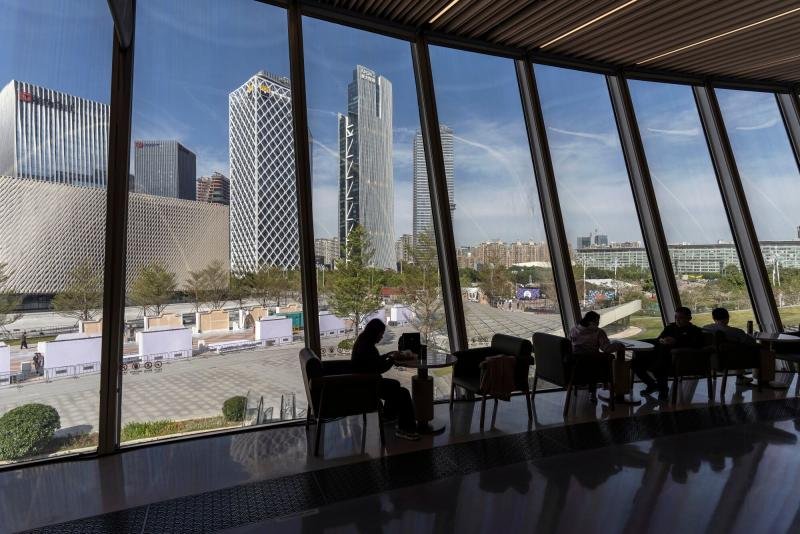
The southern Chinese megacity of Shenzhen, a symbol of the country’s rapid urbanisation and development, has spent decades transforming urban villages and tenement blocks into dense public housing estates and massive industrial and office parks.
Now, in a move that speaks volumes about its scarcity of land, the tech hub is relocating an enormous landfill from the city centre, an act that could allow for the development of floor space totalling more than 1 million square metres on 30 hectares (74 acres) of newly open land.
Work is in full swing to move and detoxify more than 2.55 million cubic metres of waste materials buried for decades in a landfill in Shenzhen’s Luohu district, not far from the border with Hong Kong.
The 2.17 billion yuan (9.77 billion baht) project will free up and transform the land, now occupied by municipal and construction waste, so that it can house artificial intelligence servers, biotech labs and art and design studios for modern manufacturing, according to the city’s government.
Home to tech giants Tencent, Huawei Technologies, BYD and DJI, Shenzhen’s area of about 2,000 square kilometres is less than a third of Shanghai’s and only 12% of Beijing’s.
But the gross domestic product of the city, which is home to 18 million people, was 3.68 trillion yuan last year, ranking third among all mainland Chinese cities, and a lack of space is constraining its further development.
The landfill being vacated was in use between 1983 and 1997, with the site originally chosen because it was on the fringe of what was then a young city. But Shenzhen’s exponential expansion over the decades has far exceeded urban planning boundaries, turning the landfill into an eyesore at the heart of the city and a potential hazard.
Giant excavators and trucks are now hard at work to move at least 6,000 cubic metres of waste a day.
To mitigate the impact on nearby residents, a giant 116,900 square metre tent has been erected to shield the site and contain leaks, including any foul odours and the discharge of liquid leachates that usually contain high concentrations of polluting materials. Engineers also expect to excavate 330,000 tonnes of municipal solid waste that will be incinerated for power generation.
While district residents have expressed support for the removal of the waste and the site’s redevelopment, they have also raised concerns on social media about the toxins that could be released in the process, calling for stringent monitoring to ensure the safety of those living nearby.
It is not the first time that Shenzhen has relocated a landfill, with a waste storage site and several open dumps turned into parcels of land for redevelopment in the city’s Yantian free-trade zone in the 2010s.
Xu Qiyong, a deputy dean of Peking University’s School of Environment and Energy, told the Shenzhen Evening News the city’s landfill removal model could be replicated in other urban centres facing land shortages, at home and abroad.
“The scale and volume of waste being removed and treated to create new land [in Shenzhen] are unseen across the world,” he said. “When Chinese cities explore better use of precious urban land, more landfills will be dealt with.”
Source – Bangkok News