Thai military eyes AI-led warfare plan
New framework for smart defence ops
PUBLISHED : 19 May 2026 at 05:53
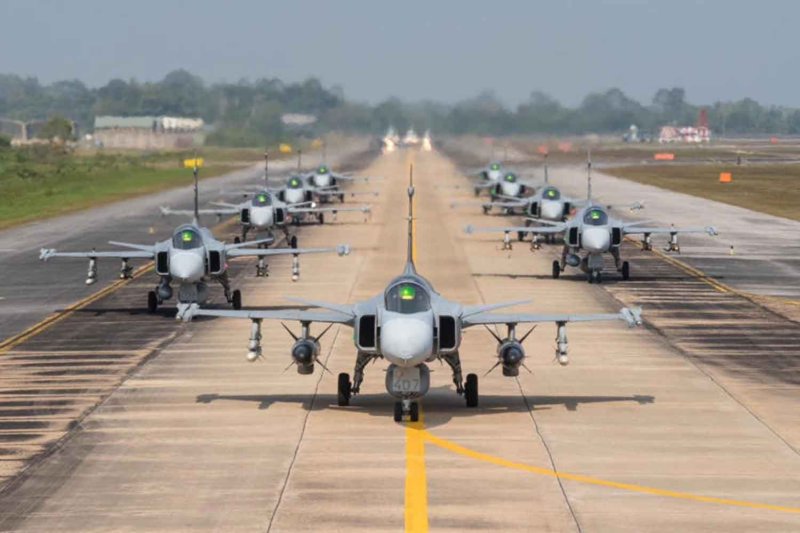
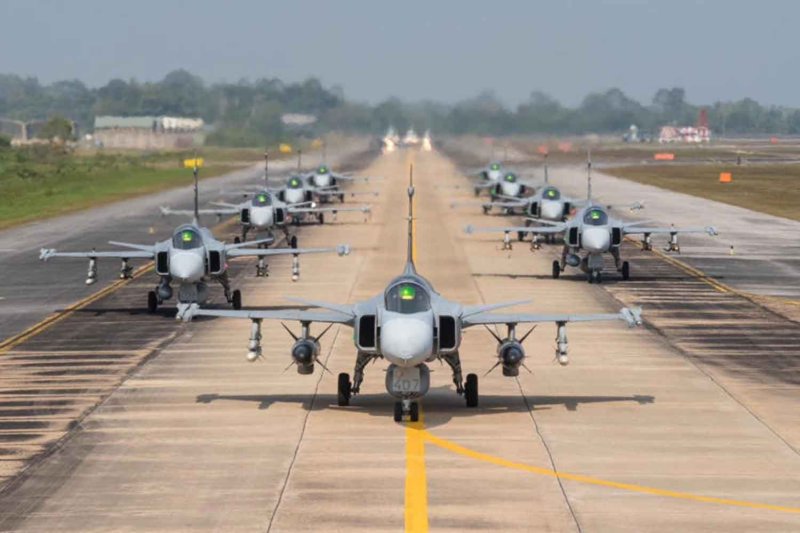
The Royal Thai Armed Forces plan to establish a new Joint Capabilities Command (JCC) in the next fiscal year as part of a push to develop autonomous military systems and ramp up multi-domain warfare capabilities.
Chief of Defence Forces Gen Ukris Boontanondha chaired the fourth meeting of service commanders for fiscal year 2026 on Sunday at the Royal Thai Air Force headquarters in Bangkok. The meeting was attended by the commanders of the army, navy, air force and the national police chief.
The principal agenda focused on developing autonomous systems to cope with rapidly changing security and technological environments.
Amid the growing role of AI and autonomous technologies in modern warfare, the Royal Thai Armed Forces headquarters outlined its vision for “All Domain Operations” covering land, sea, air, space and cyber domains. The strategy aims to improve operational precision, reduce troop casualties and ensure continuous operations.
Military officials said a joint autonomous systems and air defence unit has already been established under the planned JCC framework. The initiative also seeks closer cooperation with the domestic defence industry and leading academic institutions, including Chulalongkorn University, Mahidol University and Chiang Mai University, with the goal of achieving long-term self-reliance in defence technology.
Following the meeting, Maj Gen Withai Laithomya, the Royal Thai Armed Forces spokesman, said the armed forces had proposed a three-tier development framework for autonomous systems.
At the first level, humans would retain final decision-making authority, for example, in attack drones and bomb-disposal robots. The second level involves systems capable of operating independently under intermittent human supervision, including unmanned surface vessels and autonomous vehicle convoys. The third level consists of fully autonomous systems designed for high-risk environments inaccessible to humans, such as autonomous drone swarms and automated mine-clearing systems.
The spokesman said autonomous systems offer five main advantages: speed, 24-hour operational continuity, improved battlefield safety, precision targeting through sensor systems, and integrated connectivity across land, maritime, air and cyber operations.
The Royal Thai Armed Forces headquarters has already deployed several autonomous technologies, including AI-based cyber threat detection systems, drones for disaster evacuation and logistics, and mine-clearing vehicles.
Source – Bangkok News