This is how exposed European Big Pharma is to the U.S.

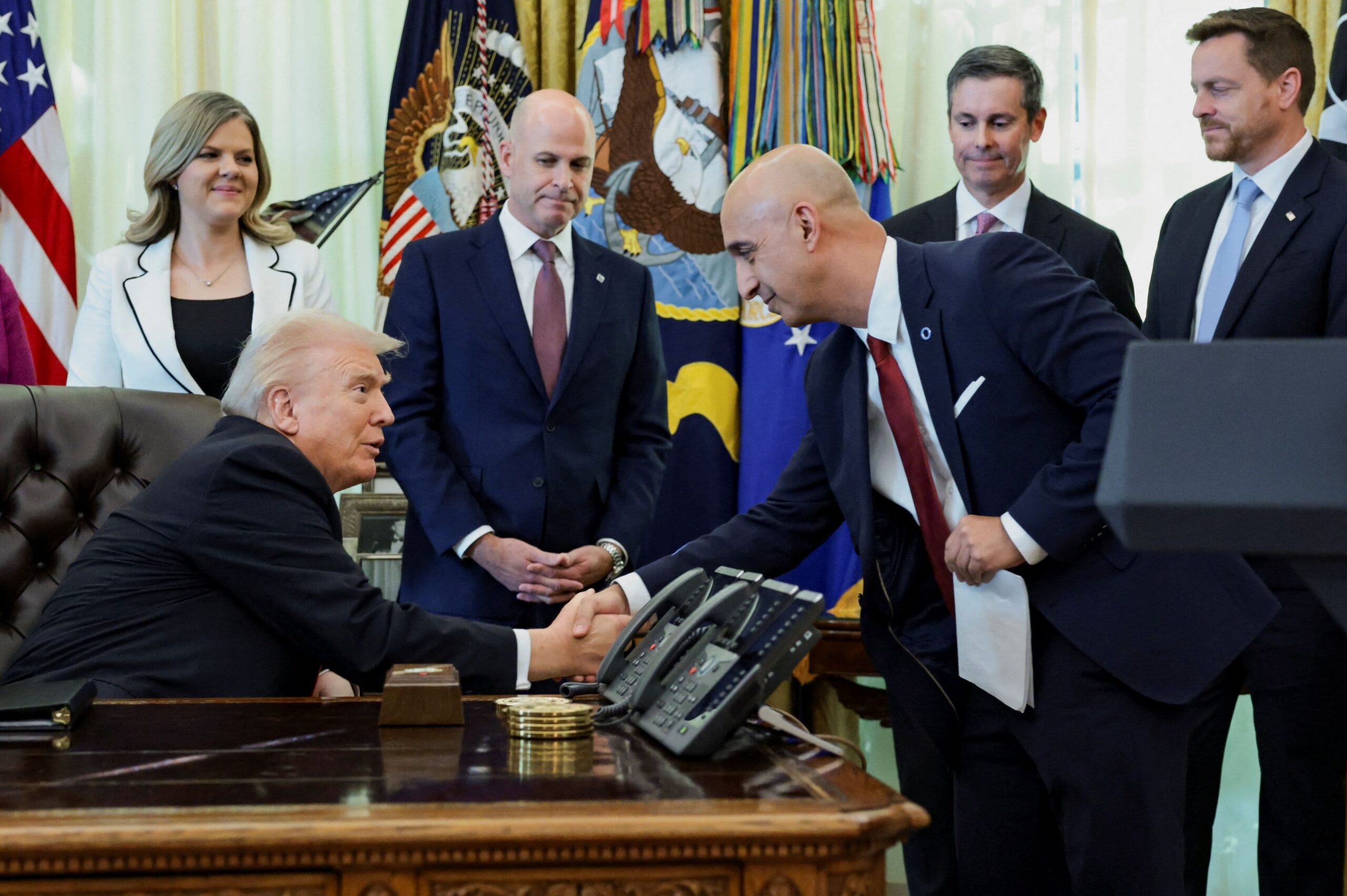
Novo Nordisk CEO Maziar Mike Doustdar shakes hands with U.S. President Donald Trump during an event to announce a deal with Eli Lilly and Novo Nordisk to reduce the prices of GLP-1 weight‑loss drugs during an event in the Oval Office at the White House in Washington, D.C., U.S., November 6, 2025.
Jonathan Ernst | Reuters
Drug pricing has emerged as one of the biggest issues for pharmaceutical companies this year, as the U.S. looks to dramatically reduce the costs paid by consumers.
As the largest single market for most pharma and biotech firms, higher drug prices in the U.S. — often nearly three times as costly as in other countries — are a key factor in the industry’s reliance on American sales, with branded drugs commanding even steeper premiums.
President Donald Trump has pushed for lower drug prices for Americans through so-called Most Favored Nations drug pricing, whereby the prices in the U.S. are set at the lowest price paid by other wealthy countries. That could have a tremendous impact on companies’ balance sheets.
But exactly how exposed are Europe’s biggest pharma companies to the U.S. market?
Majority U.S. sales
Among the 10 largest biopharmaceutical companies in the Stoxx 600 health index, five have a majority of their total sales from the U.S.: Roche, Novo Nordisk, GSK, Argenx, and UCB.
Argenx is the most exposed, with 85% of total sales originating in the U.S. in its last reported period.
The least exposed are Germany’s Merck KGaA and Bayer, with about 30% of sales coming from the U.S. Both Merck and Bayer have diversified businesses that go beyond pharmaceuticals while Roche also has a sizeable diagnostics division.
Meanwhile, AstraZeneca, the FTSE 100’s largest company, generates 42% of its sales from the U.S., and is aiming to boost this share as it targets $80 billion in revenue by 2030. In its third-quarter earnings report, the company, which has a broad portfolio of blockbuster drugs comprising cancer, respiratory, and diabetes medicines, said it is delivering on its strategy to strengthen operations in the U.S. to “power growth.”
The Cambridge, U.K.-based company has also pledged significant investments in the U.S., just like peers Novartis, Roche, and GSK, since Trump took up his second presidential term.
Making deals
Trump’s push for slashing drug prices has led many firms on both sides of the Atlantic to make deals with the administration.
In May this year, the president signed an executive order establishing MFN drug pricing. He has also sent letters to 17 major drugmakers, calling for them to slash U.S. prescription prices to levels paid overseas.
At the same time, Trump has made a push for onshoring production of various goods, including pharmaceuticals, and threatened triple-digit tariffs for drugmakers that fail to invest in U.S. manufacturing — further ramping up the pressure on companies to make deals with his administration.
AstraZeneca, Novo Nordisk, and other U.S. pharma giants have already made deals with Trump to lower prices of their medicines in the country, although analysts say it may not have a significant impact on their bottom lines due to the way the deals were structured.
“[AstraZeneca’s] MFN deal is more benign than appreciated, but EU countries may see access to drugs reduced,” said Jefferies analysts in November.
Late Wednesday, Bloomberg reported that heavyweights Roche and Novartis – the two biggest European pharma companies by market value – were closing in on drug pricing deals with the Trump administration, which may be announced as soon as Friday.
Both companies told CNBC they supported the administration’s goal of lowering drug costs for Americans but declined to confirm an imminent deal. Novartis said it was “in discussion with the Administration.”
– Carolin Roth contributed to this report
Source – Middle east monitor