U.S. strikes Iran’s Qeshm Island as Vance hopes for ‘negotiated settlement’ with Tehran

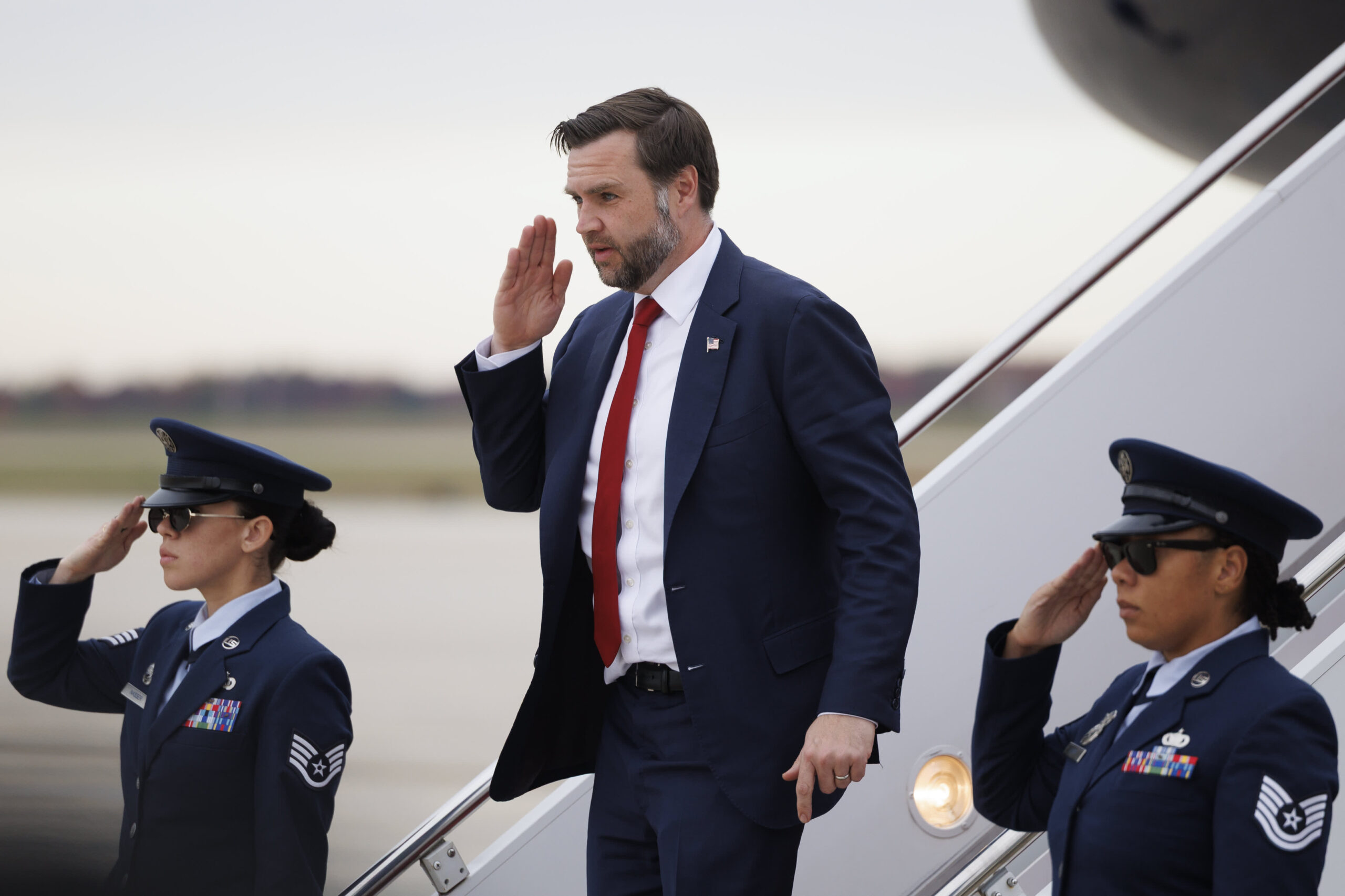
JOINT BASE ANDREWS, MARYLAND – NOVEMBER 2: Vice President JD Vance descends from Air Force Two on November 2, 2026 in Joint Base Andrews, Maryland. The Vice President returned to Washington following midterm campaign stops in New York and Ohio.
Tom Brenner | Getty Images News | Getty Images
The U.S. reportedly carried out strikes against Iran’s Qeshm Island on Monday, a U.S. official has told MS Now, as Vice President JD Vance expressed hopes of reaching a “negotiated settlement” with Tehran.
The official called the U.S. strikes “a defensive measure” in response to “Iranians using surface to air missiles against US assets.”
The strikes were initially reported by The Wall Street Journal, which added that Washington has been carrying out “limited strikes” against the country in recent weeks.
The military campaign against Iran has been kept quiet on purpose so as not to signal any intention of major combat escalation, the report said, quoting an unnamed official.
Qeshm Island
Qeshm Island, off Iran’s southern coast, is the largest island in the Persian Gulf. Located near the Strait of Hormuz, it has emerged as a potential U.S. target amid reports that anti-ship missiles, mines, drones and attack craft are being kept there in underground tunnels.
President Donald Trump’s administration has been talking down risks of an all-out war with Iran, with Vance being the latest to claim “good progress” in talks with Iran.
“The president and I both feel really good about the prospect of potentially coming to a negotiated settlement,” Vance told CNN on Monday.
He added, though, that Iranians are “unpredictable” and Trump retains “kinetic and non-kinetic” options against Tehran. Vance said that Washington has not set any deadline for reaching a peace deal with Iran.
A senior Iranian official told the Reuters news agency on Tuesday that Tehran would respond to U.S. aggression forcefully in the region beyond, as they warned the two countries remained far from reaching a deal.
“The enemy seeks to force the Iranian nation into submission through threats and military action, but they are sorely mistaken, Iran will not submit,” the official said.
Qatari mediators reportedly travelled to Tehran on Monday night for talks on a version of the draft U.S.-Iran deal that has been under negotiation for the past eight days.
“Tehran’s conditions must be met if the US wants Hormuz reopened,” the Iranian official told Reuters, adding that nuclear talks could only start afterwards and that the country would not accept Washington’s “excessive demands.”
Nuclear threat
Trump said earlier Monday that the U.S. had to go to war with Iran to stop the country from having “a nuclear weapon,” that “we’re not going to allow Iran ever to have a nuclear weapon. And they understand that.”
Last month, the president had said the U.S. will not attack Iran before the midterm elections, after polls ahead of the ballot showed that support for the war had dwindled, with only 31% of Americans supporting the military action.
Trump told Fox News in an interview Monday night that the U.S. had to take a “little detour” to Iran to stop the country from having nuclear weapons.
The president said that the U.S. has bombed out all of Iran’s potential nuclear power, but he might target Pickaxe Mountain next. Located south of Iran’s Natanz enrichment plant, Pickaxe Mountain houses an underground nuclear facility.
“We might have to go after Pickaxe, but that’s not a big deal,” Trump said, adding the U.S. could destroy it in one hour.
On Nov. 1, U.S. Secretary of State Marco Rubio had also said Trump would like to resolve the Iranian war “diplomatically,” and prefers not to use military force.
Source – Middle east monitor