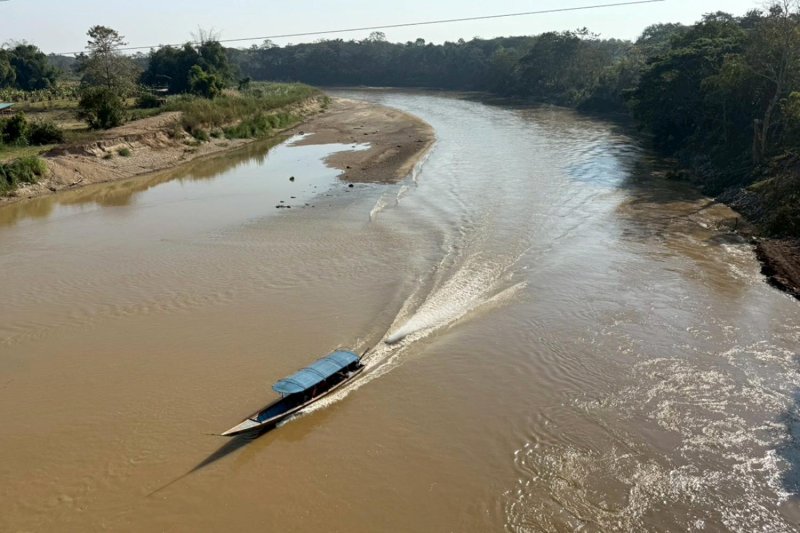
River pollution threat persists
PUBLISHED : 2 Jun 2026 at 06:45
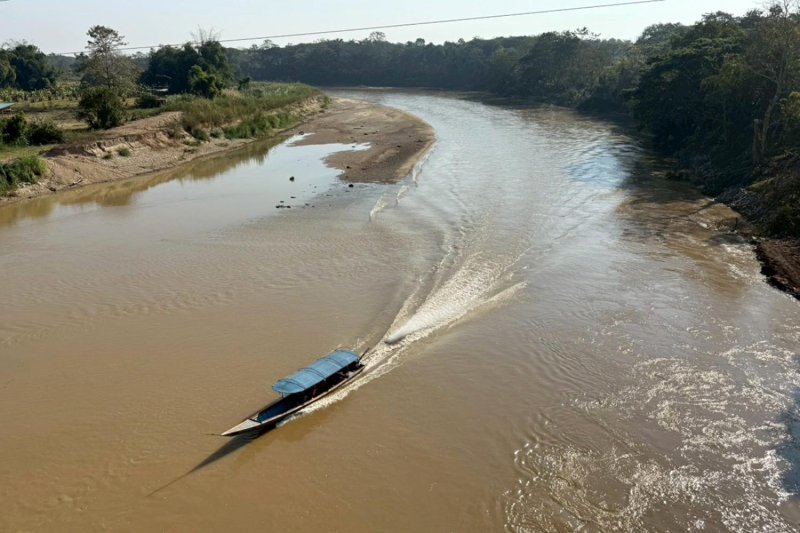
The government should treat transboundary pollution in the Kok River basin as a national agenda issue, the National Health Commission Office (NHCO) says, as the threat to locals’ health and incomes persists.
Toxic contamination from heavy metals could create severe long-term health, economic and environmental consequences for communities in the North, it warned.
The NHCO took journalists on a tour of Chiang Khong district of Chiang Rai to examine chemical contamination in the Kok, Sai, Ruak and Mekong rivers.
The tour focused on how pollution is affecting locals’ health, and the use of the National Health Act to reduce its impacts. Songpol Tulata, director of the NHCO’s Northern Public Policy Office, said last year’s contamination crisis exposed issues involving state agencies individually distributing information rather than taking a consolidated approach.
The NHCO teamed up with Chiang Mai University’s Faculty of Public Health to implement a rapid health impact assessment involving 424 residents in Chiang Mai and Chiang Rai. The study found that most affected residents were low-income farmers earning less than 5,000 baht per month.
About 91% noticed visible abnormalities in river conditions, while roughly 70% altered their water usage habits, including by buying drinking water and avoiding river activities altogether.
The economic impacts were also severe. About 63% of households reported monthly income losses averaging 1,200–1,300 baht due to declining tourism and impacts on their river-based occupations.
At the same time, families faced additional expenses of about 2,600 baht per month to secure clean water supplies.
Mr Songpol said none of the surveyed residents ever received health screenings despite reports showing heavy metal contamination exceeding safety standards in several locations.
“Based on the findings, we came up with six major policy proposals. First, we want the government to make transboundary pollution a national agenda item. We also want the government to address the problem at its source,” he said.
News reports say the contamination is linked to mining activities in neighbouring Myanmar.
Source – Bangkok News